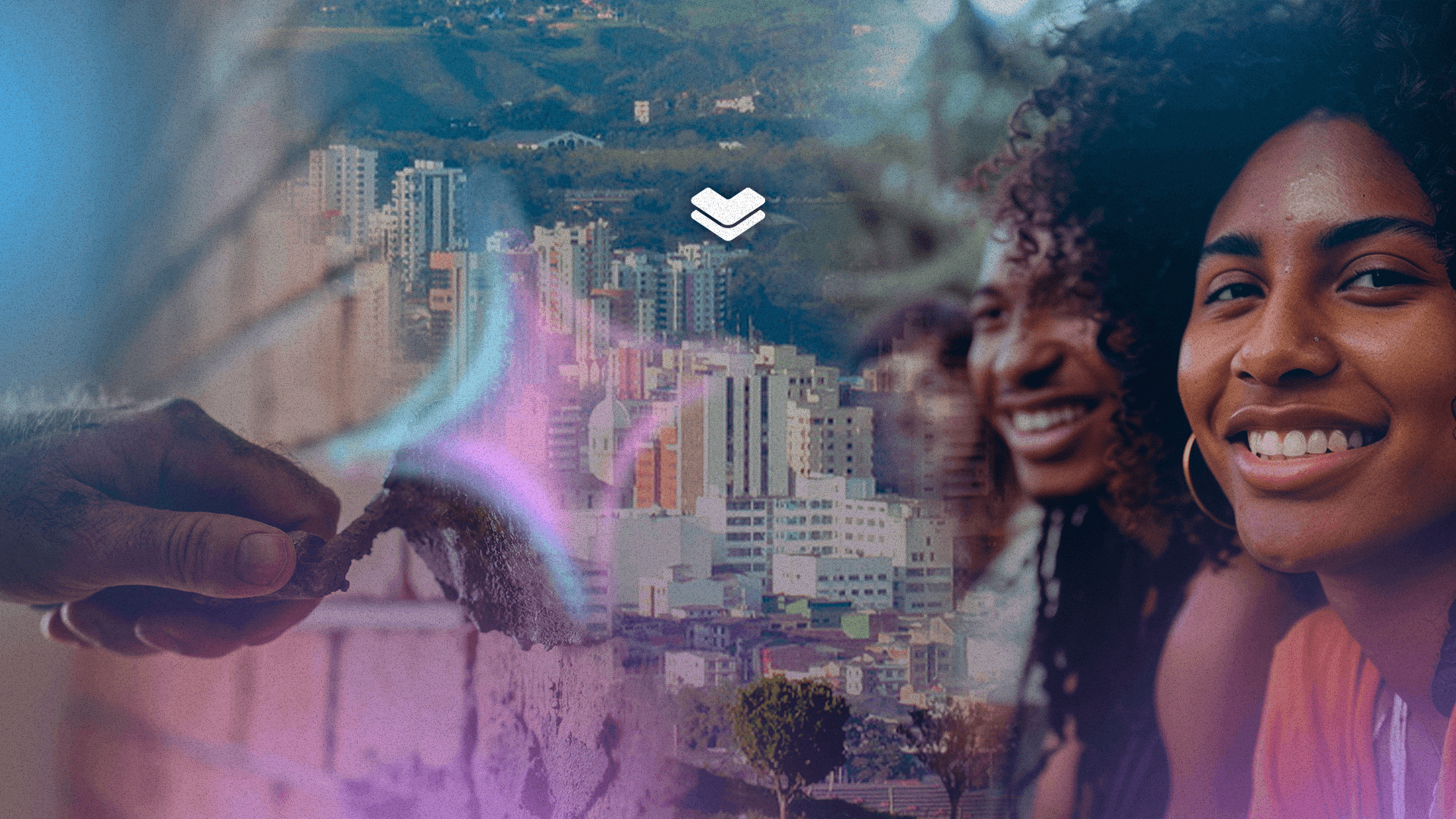
Reconstructing Colombia is more than just building walls

VIIO
Publish date: 9/28/2026
Last updated: 9/28/2026
On August 10, 2026, at 7:34 in the morning, Colombia shook.
A magnitude 7.4 earthquake with its epicenter in Chocó swept across the country's southwest in less than a minute. Chocó, Risaralda, Caldas, Quindío, and Valle del Cauca were placed on red alert. The images arrived before the official reports: collapsed buildings in Pereira, shattered façades in Manizales, unrecognizable neighborhoods in Cali, communities cut off in Chocó.
But there is one dimension of the damage that appears in no official report, and it is the one that takes longest to heal.
What is lost when the earth moves
Some things can't be rebuilt with concrete: the neighborhood where three generations grew up, the corner store that was the neighbors' meeting point, the church where the children were baptized, the farm a family had spent decades cultivating. This earthquake didn't just strike a map—it struck memory.
Chocó is not merely a geographic region. It is 8% of the planet's biodiversity; it is drum, it is river, it is Pacific—and it already carried decades of historical debt before the quake. The Coffee Cultural Landscape of Risaralda, Caldas, and Quindío is a UNESCO World Heritage Site; Pereira, Armenia, and Manizales already know how to rise again—but that doesn't make this easier, it makes it more familiar. Valle del Cauca is salsa, it is Cali, it is an agro-industrial powerhouse, it is the port that connects Colombia to the world.
These aren't just data points. They are the place where someone learned to walk.
The inequalities the earthquake revealed
Natural disasters didn't create inequalities—they revealed them. The communities with the fewest formal resources—no credit, no insurance, no savings—are the ones that take longest to recover. Not because they have less resilience, but because they have fewer tools.
The bank branches that stayed closed in the days after the quake are no minor detail. For thousands of people and small businesses, it meant the money existed but couldn't move. Social reconstruction doesn't begin when the rubble is cleared—it begins when the everyday economy starts working again.
Culture cannot be lost
Colombia has survived Armero, Armenia, Mocoa, and Providencia—and in every case, what made rebuilding possible was not investment alone, but identity. Coffee culture didn't survive generations because someone managed it well, but because there was a sense of belonging so deeply rooted that no earthquake could destroy it. The music of the Pacific, the cuisine of the Eje Cafetero, the nightlife of Cali—these are what make a person want to return to their place and stay. Protecting that culture is the guarantee of protecting identity.
Economic recovery
The physical reconstruction of the affected regions could exceed COP 20 trillion, according to estimates from AmCham Colombia—a figure the State cannot shoulder alone.
The private sector has a key role. Companies that keep operating generate jobs when they're needed most; those that pay their suppliers on time keep the production chain alive; and those with their financial infrastructure in order can move with agility. In times of reconstruction, operational efficiency is a form of responsibility.
VIIO's Role
VIIO was born in Colombia. It is part of a country facing an emergency. Our users, partners, and teams are connected to the affected regions.
In moments like these, infrastructure becomes a tool for restoring daily life: so a family can buy food, so a company can pay its employees, so a supplier can receive their funds, and so money keeps reaching where it's needed. Our role is not to replace those leading the emergency response, but to build tools that help people and businesses access their resources when it becomes harder to do so.
Colombia has always known how to rise
Reconstruction will take years, and it will require far more than concrete and decrees: that people can rebuild their lives with dignity, that businesses reopen, that families rebuild not only their homes but their routines, their communities, their sense of place.
The country that will rebuild those regions already exists—and it's made of the same material that built them the first time: resilience, creativity, community, and pride.
Chocó, Risaralda, Caldas, Quindío, Valle del Cauca are not simply regions hit by an emergency. They are homes. They are stories. They are Colombia.