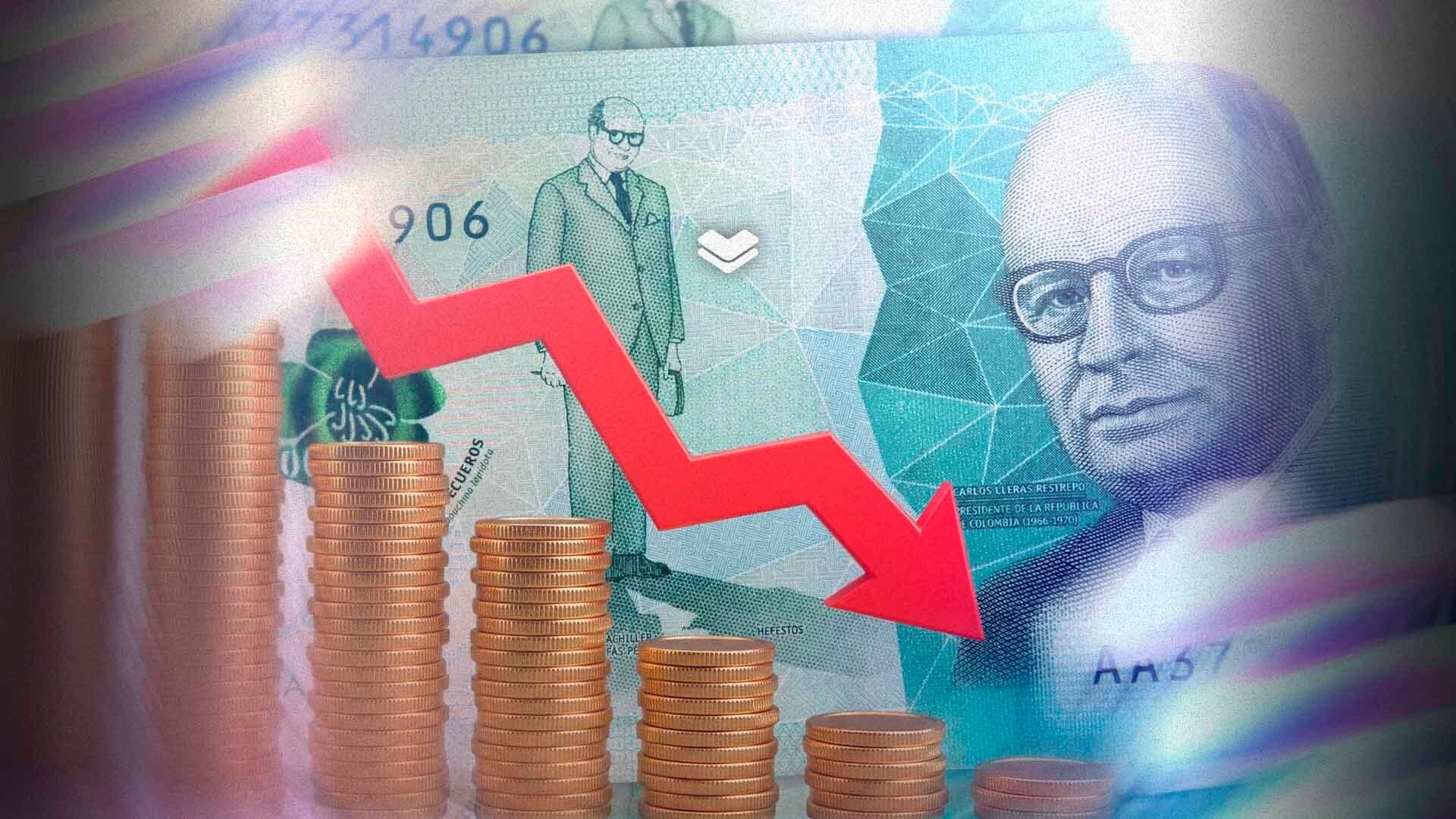
Colombian peso devaluation: what it means for you and what your options are

VIIO
Publish date: 10/30/2026
Last updated: 10/30/2026
When the peso loses value against the dollar, everything you pay for in dollars costs you more pesos: a trip, an imported computer or a debt in dollars. But the peso also gets stronger, and that is exactly what is happening today: the TRM (Tasa Representativa del Mercado, the official exchange rate) is at COP 3,191.47, 17.7% lower than a year ago. So rather than trying to guess where the dollar is headed, it makes sense to understand how much its movements affect you and what options people in Colombia use to reduce that exposure, each with its own costs and risks.
The essentials, fast
Devaluation or depreciation? In Colombia the market sets the price of the dollar, so Banco de la República (Colombia's central bank) uses the term depreciation when the peso loses value. In everyday conversation, almost all of us call it devaluation.
Where is the dollar today? The TRM in effect on October 22, 2026 is COP 3,191.47. That is 17.7% lower than a year ago and 36.9% lower than the record set in November 2022.
What can you do? First, look at what share of your expenses, debts and income is in dollars. Then, learn the costs, risks and rules of each option before you move your money. No option eliminates exchange rate risk.
Devaluation or depreciation? Who sets the TRM
Banco de la República explains it this way: under a fixed exchange rate regime, when the price of foreign currency goes up, it is called devaluation; under a flexible regime, "like Colombia's, where there is no fixed value for foreign currency," it is called depreciation. The opposite is revaluation or, under a flexible regime, appreciation. In either case, when the peso depreciates, it loses purchasing power against foreign currencies.
Colombia has had a floating exchange rate regime since September 1999. Banco de la República follows an inflation-targeting framework, with an inflation target of 3%, and it does not buy or sell foreign currency to individuals.
The TRM (tasa representativa del mercado, or representative market rate) is the weighted average of the dollar purchases and sales made by foreign exchange market intermediaries between 7:30 a.m. and 1:00 p.m. The Superintendencia Financiera (Colombia's Financial Superintendence) calculates and certifies it every day, and it takes effect the following day.
How much the dollar has moved: official figures
Here are some TRM values from the Superintendencia Financiera's official series, compared with today's:
| Date | TRM, and today's dollar compared with that date |
| October 22, 2016 | COP 2,944.25. Today the dollar is 8.4% more expensive |
| October 22, 2021 | COP 3,783.30. Today the dollar is 15.6% cheaper |
| November 5, 2022 (record) | COP 5,061.21. Today the dollar is 36.9% cheaper |
| October 22, 2025 | COP 3,876.60. Today the dollar is 17.7% cheaper |
| October 22, 2026 | COP 3,191.47 (today) |
In 2026, the dollar has moved sharply in both directions. The TRM fell from COP 3,797.64 on March 4 to COP 3,048.12 on August 22, its lowest level since October 2018: a 19.7% drop in less than six months. Since then, it has risen 4.7%.
In its July 2026 report, Banco de la República noted that "the recent strengthening of the peso against the dollar" helped moderate inflation. Even so, in the minutes of its September meeting, the majority of the board warned about a possible "reversal of the exchange rate appreciation, with possible upward effects on prices." Annual inflation was 6.29% in September 2026, according to DANE (Colombia's national statistics agency), and on September 30 Banco de la República raised its interest rate to 12.25%.
If you have a business and want to see how a cheap dollar affects importers and exporters, check out our guide on the cheap dollar for businesses in Colombia.
How it affects you: prices, debts, travel, income and remittances
Exposure to the dollar works both ways. If you pay in dollars, a cheap dollar works in your favor; if you receive dollars, an expensive one does.
- Prices. According to Banco de la República, sharp exchange rate movements can raise the price of imported goods and other prices in the economy, although the effect is "less than proportional." For example, between July 2014 and February 2016, the TRM rose 81% and consumer prices rose 11%.
- Debts in dollars. If you owe in dollars and earn in pesos, every time the TRM goes up you need more pesos to pay the same installment.
- Travel and purchases abroad. An expensive dollar makes flights, hotels, subscriptions and purchases from foreign stores more expensive. If you often pay in dollars, our guide on the digital dollar card may help.
- Income in dollars and remittances. If you receive dollars and spend them in pesos, a cheap dollar leaves you with fewer pesos. USD 1,000 was worth COP 3,876,600 at the TRM of October 22, 2025, and COP 3,191,470 at the TRM of October 22, 2026: COP 685,130 less for the same amount.
The options people in Colombia use, with their costs and risks
Before you choose, figure out what share of your expenses, debts and income depends on the dollar. These are the most common options, along with what official sources say about each one. None of them is a recommendation, and all of them have costs and risks.
1. Cash dollars. Individuals cannot buy or sell foreign currency from Banco de la República; they do it through professional foreign currency dealers, such as exchange houses (casas de cambio). These dealers buy for less than they sell: on October 19, 2026, an exchange house was buying USD 100 bills at COP 3,170 and selling them at COP 3,230, so buying and selling back on the same day cost about 1.86%. Cash can also be lost or stolen, and it earns no return. If you leave or enter the country with more than USD 10,000 in cash, you must declare it to DIAN (Colombia's tax and customs authority).
2. Dollar accounts. You can hold dollars in an account at a bank or on a platform, in Colombia or abroad; in our guide on the dollar account in Colombia, we compare the options and what they require. Keep in mind that FOGAFÍN (Colombia's deposit insurer) deposit insurance covers up to COP 50,000,000 per person at each institution, and it applies to deposits, in pesos or in foreign currency, held at member institutions in Colombia.
3. CDTs and UVR products. CDTs (certificados de depósito a término, Colombian term deposits) are also covered by FOGAFÍN, with the same limit. The UVR (Unidad de Valor Real) is a unit of account certified by Banco de la República that tracks inflation (the IPC, Colombia's consumer price index). Keep in mind that these products are in pesos: they respond to inflation, not to movements in the dollar.
4. International funds and ETFs. Through a stockbrokerage firm (sociedad comisionista de bolsa), you can buy foreign securities on the Mercado Global Colombiano of the Bolsa de Valores de Colombia (the Colombian Stock Exchange), in pesos and without opening accounts abroad. You can also invest directly abroad, without registering it with Banco de la República. Their value can go down, and the exchange rate effect works both ways.
5. Digital dollars. These are digital assets, such as USDC or USDT, that aim to be worth 1 dollar. Banco de la República makes clear that they are not legal tender, and the Superintendencia Financiera warns that transactions with virtual currencies are not protected by any private or government guarantee. Their price can drift away from the dollar: USDC fell to 87 cents in March 2023, according to the Federal Reserve. Also, if you send them to the wrong network or address, you can lose them. In our guide USDC vs USDT, we explain how they differ.
With VIIO, for example, you can receive payments from abroad in your virtual dollar account, via ACH or Wire, or in your virtual euro account, via SEPA, where VIIO converts the euros into digital dollars that you see in your balance. You can also save, send, transfer or spend with your VIIO Visa Card. Your balance consists of digital assets such as USDC or USDT; it is not a bank deposit. VIIO is not a financial institution, does not take deposits from the public under Colombian law, and is not supervised by the Superintendencia Financiera de Colombia (Colombia’s Financial Superintendence). The digital assets available on VIIO are not legal tender or foreign currency, and they are not covered by FOGAFÍN or any government guarantee. The VIIO Visa Card is operated by Persimon S.A.S.
If you have already decided to keep part of your money in dollars, this guide compares where to do it: how to save in dollars from Colombia.
6. Income in dollars. If you work for clients abroad, you are exporting services. According to Banco de la República, that is a free-market transaction: you are not required to channel those payments through the foreign exchange market, although you can do so voluntarily with a foreign exchange declaration (declaración de cambio). Remember that when the dollar falls, that income is worth fewer pesos. In this guide, we compare how to receive payments from abroad.
What the rules say: Banco de la República, DIAN and FOGAFÍN
- Accounts abroad. According to Banco de la República, residents of Colombia can hold bank accounts abroad without registering or reporting them, unless they use them for foreign exchange transactions that must be channeled through the regulated market or to pay domestic transactions in foreign currency. In that case, they are compensation accounts (cuentas de compensación): they must be registered, and their activity must be reported to Banco de la República and DIAN.
- Payments between residents. Transactions between residents of Colombia are paid in pesos, except through compensation accounts.
- Supporting documents. If you carry out foreign exchange transactions, you must keep the documents that support them.
- Foreign asset declaration (Form 160). It is filed by income taxpayers whose assets abroad exceed 2,000 UVT (Unidad de Valor Tributario, the tax value unit) as of January 1, that is, COP 104,748,000 in 2026. Assets exceeding 3,580 UVT (COP 187,498,920 in 2026) must be itemized one by one. It is an informational return: there is no amount to pay.
- Cash when traveling. If you enter or leave the country with more than USD 10,000 in cash, you must declare it to DIAN.
- FOGAFÍN. It covers up to COP 50,000,000 per person at each member institution, for deposits such as savings accounts, checking accounts and CDTs, in pesos or in foreign currency, held in Colombia.
Frequently asked questions
What is the difference between devaluation and depreciation? According to Banco de la República, devaluation is the term for a fixed exchange rate regime, and depreciation is the term for a flexible one like Colombia's. In both cases, the peso loses value against other currencies.
Does holding dollars protect my money from peso devaluation? It depends on which way the dollar moves. If the TRM goes up, your dollars are worth more pesos; if it goes down, they are worth fewer. Someone who exchanged pesos for dollars on October 22, 2025 had, one year later, about 18% less measured in pesos. Holding dollars is not a guarantee.
Do I have to register an account abroad with Banco de la República? No, unless you use it for foreign exchange transactions that must be channeled through the regulated market or to pay domestic transactions in foreign currency. In that case, it is a compensation account and you must register it.
Are digital dollars covered by FOGAFÍN? No. FOGAFÍN covers deposits at member institutions in Colombia, and the Superintendencia Financiera warns that transactions with virtual currencies are not protected by any private or government guarantee.
Note from our team: this content is for informational purposes only and does not constitute financial, tax or legal advice. TRM, inflation and interest rate figures change often; they are dated, and you should check them against official sources before making a decision.
Sources
- Banco de la República: What is the difference between devaluation, revaluation, depreciation and appreciation of a currency?
- Banco de la República: Definition and objective of monetary policy
- Banco de la República: The floating exchange rate regime in Colombia (PDF, 2001)
- Banco de la República: Circular Reglamentaria Externa DOAM-146 (PDF, TRM calculation)
- Banco de la República: Basic concepts of foreign exchange regulation and transactions
- Banco de la República: Overview of compensation accounts
- Banco de la República: Financial investment and investment in assets held abroad
- Banco de la República: Box 1, Exchange rate shocks and inflation in Colombia (Inflation Report, June 2016)
- Banco de la República: Monetary Policy Report, July 2026
- Banco de la República: Minutes of the September 2026 meeting
- Banco de la República: What is the UVR and who certifies it?
- Banco de la República: Box 3, Stablecoins (Financial Stability Report, December 2025)
- Superintendencia Financiera de Colombia: historical TRM series (open data)
- Superintendencia Financiera de Colombia: transactions with virtual currencies are not protected by any type of guarantee
- DANE: Consumer Price Index, September 2026 (PDF)
- DIAN: Foreign asset declaration
- DIAN: Press release 097 of 2019 (cash declaration)
- FOGAFÍN: Resolución JD 001 de 2026 (Board Resolution 001 of 2026, PDF)
- Bolsa de Valores de Colombia: Mercado Global Colombiano
- Federal Reserve: Financial Stability Report, May 2023
- VIIO: Terms and conditions