Digital Dollar Cards: How They Work, Costs, and Limits

VIIO
Publish date: 9/16/2026
Last updated: 9/24/2026
A digital dollar card isn't just another international card. The real difference is what happens at the moment of payment: whether you're spending from a balance that's already in dollars, or your bank is automatically converting those dollars to pesos at a rate you don't control. That distinction — more than the card's design or logo — is what determines how much each purchase actually costs you.
This guide explains how these cards work, what sets them apart from a traditional Colombian credit or debit card, and compares three options available in Colombia: VIIO, Global66, and Littio.
Editorial note: VIIO is one of the providers compared below. Every figure in this article is sourced directly from each provider's published terms, so you can verify them independently before deciding.
The essentials, at a glance
VIIO
| Attribute | Value |
| Automatic conversion when paying in USD | Not applicable — you're already holding dollars |
| Fee on purchases in a currency other than your main balance | Per the prevailing Visa rate |
| Maintenance fee | Free |
| Physical card issuance | Free, requires a minimum balance of USD 50 |
| Network | Visa |
| Published spending/withdrawal limits | No fixed figure; limits vary and are shown in the app |
Global66 (SmartCard)
| Attribute | Value |
| Automatic conversion when paying in USD | No — pays 1:1 from your balance in that currency, if you hold it |
| Fee on purchases in a currency other than your main balance | No FX fee (uses the real exchange rate) |
| Maintenance fee | No maintenance cost |
| Physical card issuance | $8,403 COP, charged only if there's no activity on the Global Account that month |
| Network | Mastercard |
| Published spending/withdrawal limits | Vary based on identity-verification level |
Littio Card
| Attribute | Value |
| Automatic conversion when paying in USD | No, if you pay in USD/EUR/COP/MXN |
| Fee on purchases in a currency other than your main balance | Additional 2% on currencies outside USD/EUR/COP/MXN |
| Maintenance fee | Free |
| Physical card issuance | USD 3 for the physical card |
| Network | Mastercard |
| Published spending/withdrawal limits | Withdrawals from USD 1 up to USD 5,000 per transaction |
If your card already operates in dollars or a stable currency, paying abroad doesn't trigger an automatic conversion to pesos at whatever rate your bank sets. That's the real problem these three cards solve — each in its own way.
How a digital dollar card works
In short: a traditional card converts your peso balance into the payment currency at your bank's rate; a digital dollar card already holds the balance in dollars (or an equivalent stable currency), so paying in that currency skips the conversion step entirely.
A traditional Colombian card — credit or debit — holds your balance in pesos. When you pay abroad or on a site that charges in dollars, the bank converts automatically, and that rate typically includes an extra markup that isn't always visible before you pay.
A digital dollar card flips that order: your balance is already in dollars (or an equivalent stable currency), so paying in dollars requires no conversion at all. Conversion only happens if you pay in a currency different from your balance — and that's where each platform applies different rules.
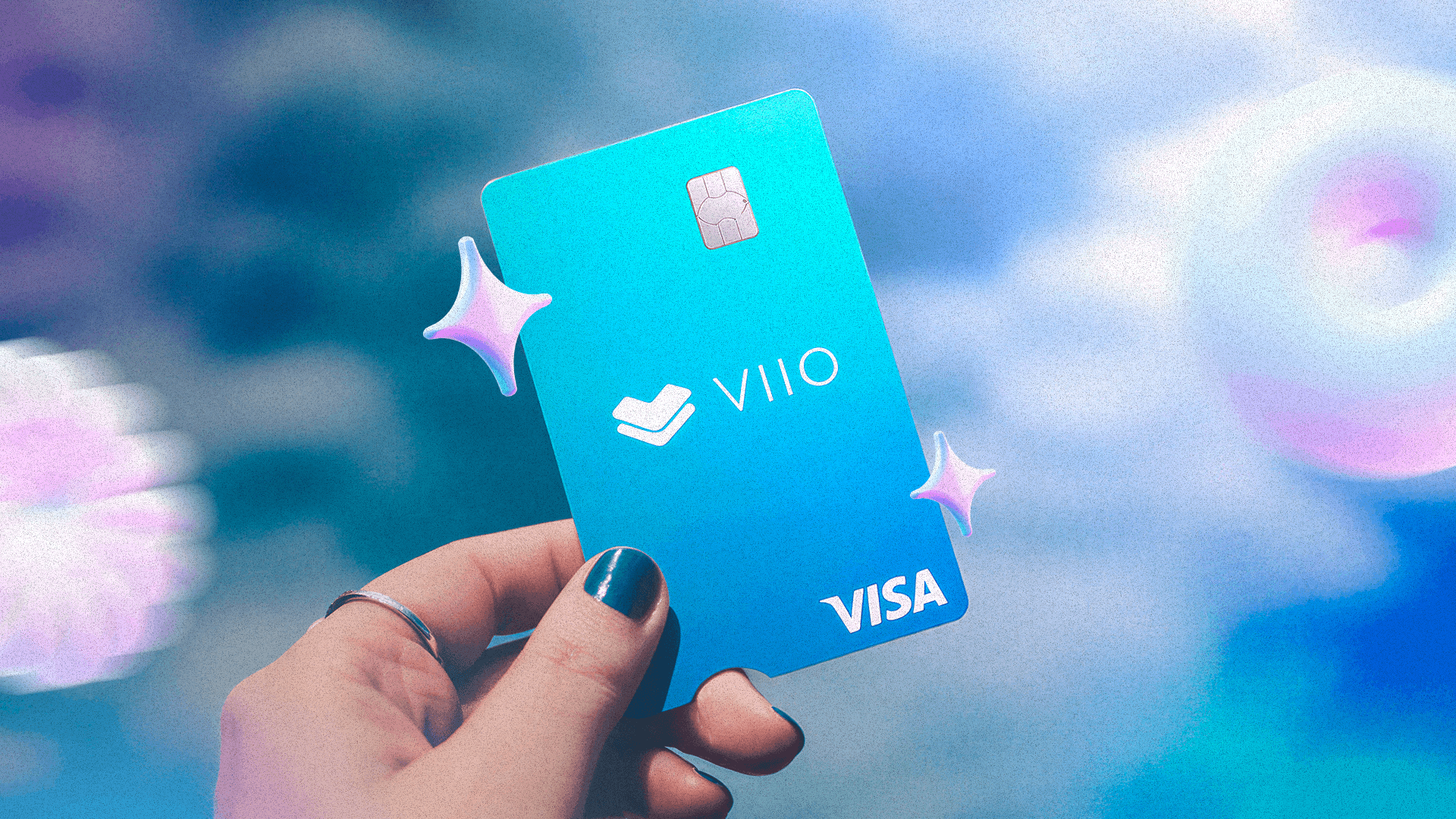
VIIO lets you hold a balance in dollars. The virtual and physical card runs on the Visa network, and purchases in dollars require no conversion because the balance is already in that currency.
Global66 works differently: its Smart Card is multi-currency. It automatically detects the transaction currency and uses the matching balance if you're holding funds in that currency, avoiding the FX markup. If you don't hold a balance in that specific currency, conversion applies.
Littio built its own group of stablecoins (USDC, EURC, COPM, MXNT) with 1:1 conversion among those four. Paying in any of those currencies carries no fee; paying in a currency outside that group adds a 2% charge plus Mastercard's conversion rate.
Costs: what each one charges — and doesn't
VIIO charges no account or card maintenance fee. The physical card is free, but requires a minimum balance of USD 50 to request (the virtual card only requires USD 3). Withdrawals to bank accounts in COP, USD, EUR, GBP, CAD, AUD, and MXN are currently fee-free, though a withdrawal can take up to 3 business days to settle.
Global66 charges no monthly maintenance fee. It does charge $8,403 COP for physical card issuance, but only in months with no activity on the Global Account. The card itself carries no FX fee when you pay in a currency you already hold in your account.
Littio charges no maintenance fee. The physical card has a one-time USD 3 shipping cost; the digital card is free. The additional 2% on currencies outside its core group is the fee worth keeping in mind if you travel outside the zone covered by those four currencies.
Limits: what each platform discloses
Littio publishes its limits clearly: withdrawals from USD 1 up to USD 5,000 per transaction, with no amount limit on transfers between your own accounts. Global66 doesn't publish a fixed number; its limits depend on the identity-verification level completed on the account.
VIIO doesn't publish fixed spending or withdrawal limits. Applicable limits can vary and are shown directly inside the app rather than on a public page, so there's no single figure to cite here.
Frequently asked questions
Why do I get charged more when I pay abroad with my Colombian card? Because the bank automatically converts the amount to pesos at a rate that includes an extra markup, typically between 2% and 4% depending on the issuer. A digital dollar card skips that step if you already hold a balance in the currency you're paying in.
Do I need a balance in the exact currency to avoid a fee? It depends on the platform. With VIIO, your balance is always in dollars, so paying in USD involves no conversion. With Global66, you need a balance loaded in that specific currency. With Littio, any of its four core currencies (USD, EUR, COP, MXN) works with no fee.
Team note: This content is for informational purposes only and does not constitute financial advice. Fees and limits can change; confirm current terms directly with each platform before deciding.